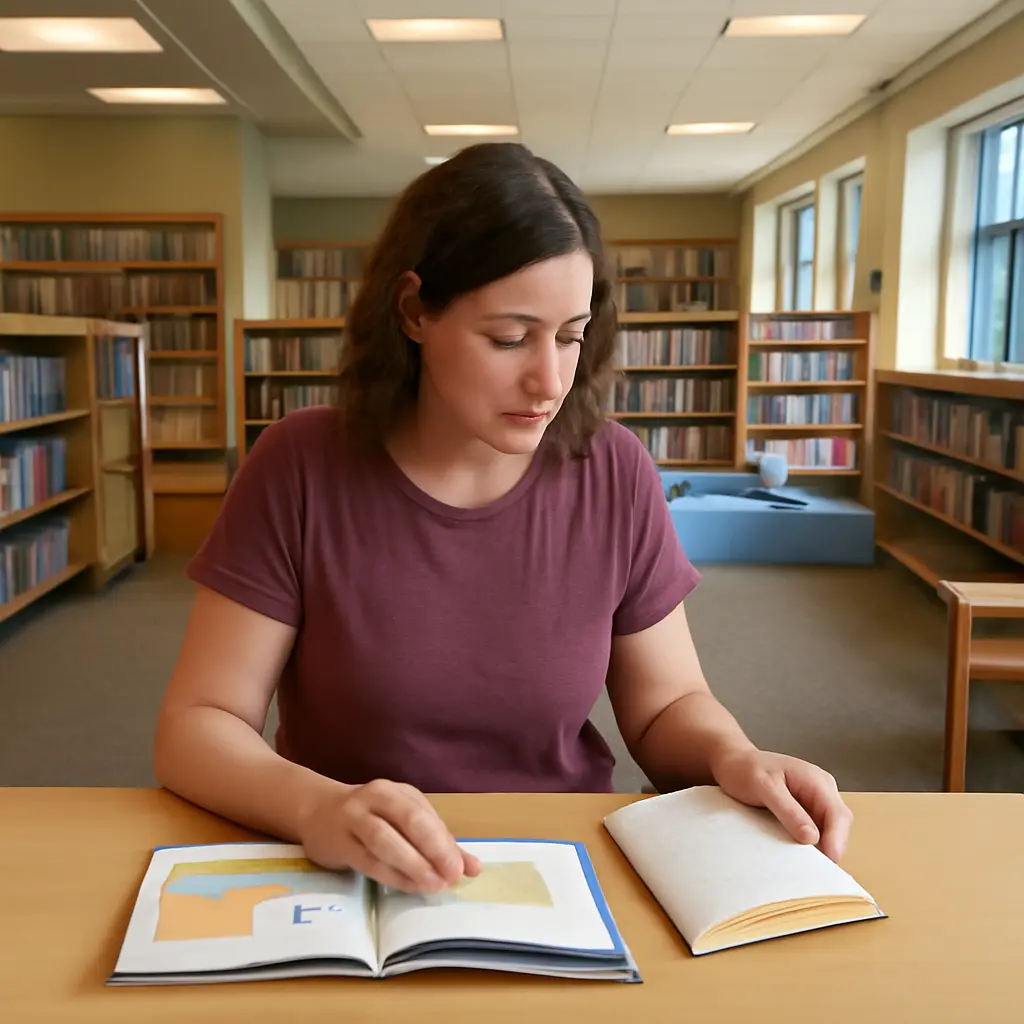
Picture Books Versus Chapter Book Illustration, Key Differences Revealed
Picture-book illustration and chapter-book illustration both help tell a story, but they do different amounts of the storytelling. Picture books typically pair concise text with images that carry plot, mood, and meaning across the page or spread; chapter books rely more heavily on prose, using illustrations selectively to clarify scenes, establish tone, or invite readers into the story. The distinction is not simply “many pictures versus few”: format, audience, pacing, and the relationship between words and images all matter. The Cooperative Children’s Book Center reported that it received 3,662 books by U.S. publishers for its 2023 collection, illustrating the broad range of children’s publishing in which these visual approaches operate. Understanding the differences can help writers, illustrators, educators, and families choose or create books suited to readers’ needs.
Picture-book illustration and chapter-book illustration serve different storytelling roles
Illustration is visual artwork made to accompany and communicate a book’s content. In children’s books, its role depends on the format: picture-book art is often a core narrative channel, while chapter-book art is usually an occasional visual companion to a text-led narrative. These are tendencies, not strict rules. A picture book can contain very few images, and a chapter book can include abundant artwork, comics, or full-page scenes.
Picture-book illustration: images as part of the narrative
Picture-book illustration is artwork designed to work in close partnership with text, often across a sequence of pages or double-page spreads. The words may tell one part of the story while the pictures add information, emotion, humor, or a contrasting point of view. Children’s book scholar Maria Nikolajeva and literary scholar Carole Scott describe this relationship in How Picturebooks Work as a dynamic interaction between verbal and visual communication.
The format is especially suited to visual pacing. A page turn can delay a reveal, a repeated image can establish a pattern, and a background detail can reward rereading. The American Library Association’s Caldecott Medal recognizes distinguished illustration in an American picture book for children, reflecting the importance of visual storytelling as an artistic achievement in its own right.
Chapter-book illustration: selected images supporting prose
Chapter-book illustration is artwork placed within a longer prose narrative, commonly as occasional spot art, chapter-opening images, or full-page scenes. Because the text usually supplies dialogue, action, setting, and interior thought in greater detail, the illustrations can focus on memorable moments, character design, atmosphere, or visual orientation.
The category is broad. A lightly illustrated early chapter book may use frequent black-and-white drawings to support newly independent readers, while a middle-grade novel may contain only a few images—or none. The distinction is therefore functional as well as quantitative: an illustration’s placement and relationship to the prose matter more than a fixed number of pictures.
Format and audience shape illustration choices
Book format establishes expectations about how readers move through a story. Picture books generally ask readers to interpret words and images together; chapter books ask them to sustain attention through extended prose, with images appearing at selected points. Age and reading development influence these choices, but neither format belongs to only one age group.
Picture books use page turns and spreads to control pace
A spread—the two facing pages seen together—can present a setting, a dramatic action, or a visual contrast. The illustrator and book designer consider where the reader’s eye travels and what information appears before or after a page turn. This makes composition, scale, color, and repeated motifs part of the book’s pacing, not merely decoration.
For example, an illustrator might show a character approaching a closed door on one spread, then reveal what lies beyond after the turn. The text need not explain every detail: the image can supply clues that encourage prediction and discussion. This is one reason picture books are often read aloud, although many are also intended for independent reading and rereading.
Chapter books use illustrations selectively across longer narratives
Chapter books divide a longer story into manageable sections. Illustrations may appear at chapter openings or at moments when a visual pause can help readers imagine a character, setting, object, or event. In books for developing readers, recurring images can also provide a break from dense text and reinforce a sense of progress.
As a result, chapter-book art is often designed for continuity rather than constant coverage. Character features, clothing, settings, and visual tone need to remain consistent when an illustrator contributes images at intervals. The prose still carries most of the narrative, but the pictures can make particular scenes more vivid and memorable.
Visual storytelling differs in text-image balance and pacing
The central distinction is how much narrative work the images perform. Picture-book illustrations commonly add essential information or create meaning through contrast with the text. Chapter-book illustrations more often spotlight selected content within a story whose essential events are conveyed in prose. This difference affects the illustrator’s decisions about detail, viewpoint, and sequence.
Picture-book art can extend or contradict the words
In a picture book, an image may show that a narrator is mistaken, reveal a character’s unspoken feelings, or place a small visual joke in the background. The reader must combine both channels to understand the full scene. Scholarly work on picture books commonly calls this word-image interaction “iconotext”: meaning emerges from the relationship between verbal and visual elements rather than from either one alone.
This interdependence explains why a short text does not necessarily make a picture book simple. A sparse sentence can accompany a complex image, leaving readers to infer what happened before or what may happen next. In classroom read-alouds, educators can use these visual clues to invite observation, inference, and discussion.
Chapter-book art emphasizes key moments and reader imagination
In a chapter book, prose usually describes action and gives access to thoughts over many pages. An illustration may select one scene rather than depict every event. That selectivity leaves room for readers to construct their own mental images while still offering a shared visual reference for important characters or settings.
The amount of art varies with the book’s design and intended readership. Early chapter books may include frequent pictures, whereas longer novels may include only a map, a few chapter headings, or no interior illustrations. It is more accurate to describe a continuum of text-image balance than to assume that every chapter book is sparsely illustrated.
Production methods and design affect the finished illustrations
Illustration is shaped not only by storytelling but also by practical production decisions. Page size, printing method, color budget, paper, typography, and the book’s binding can affect the artist’s choices. Picture books often coordinate art and text across planned spreads, while chapter books may place images within a flowing sequence of typeset pages.
Picture books require coordinated spread-level design
Picture-book art is commonly planned in relation to the complete page sequence. The illustrator must account for the gutter, where the pages meet, and ensure that important faces or details are not lost in the binding. Text placement also matters: words may sit within open areas of the illustration, on a separate block of color, or on a facing page.
Color and image reproduction can influence the final result. A richly textured painting, for instance, must remain legible at the book’s printed size, while high-contrast shapes may be more effective for a small format or a young audience. The designer, editor, and illustrator therefore collaborate to make the story work as a physical object as well as an image sequence.
Chapter-book art must fit the text’s page architecture
Chapter-book illustrations are fitted around the structure of paragraphs, headings, and page breaks. Spot illustrations can sit beside text, while full-page images may create a pause between scenes or chapters. Typography and layout must remain readable, so artwork is balanced against the space required for prose.
Black-and-white line art has historically been common in many chapter books because it reproduces economically and can integrate cleanly with text. Contemporary books also use color, comics-style sequences, maps, and graphic elements. The choice depends on the intended reading experience and the publisher’s design plan rather than on a universal rule.
Examples show how the two approaches work in practice
Comparing familiar books makes the distinction clearer, while also showing that categories can overlap. The examples below illustrate typical approaches rather than defining every book in either format.
A picture-book example: Where the Wild Things Are
Maurice Sendak’s Where the Wild Things Are uses images to carry much of its emotional and narrative movement. The illustrations expand as Max’s imagined world grows, then contract as he returns home. The change in image scale and the placement of the scenes help communicate the shift in mood and time alongside the concise text.
A chapter-book example: Ramona Quimby, Age 8
Beverly Cleary’s Ramona Quimby, Age 8, illustrated by Alan Tiegreen, is a longer prose story in which illustrations accompany selected moments rather than narrating every action. The reader follows Ramona’s experiences mainly through the text, while the pictures offer visual cues about characters and scenes. This text-led structure is characteristic of many chapter books, though illustration frequency varies by edition and series.
Choosing between picture books and chapter books depends on purpose
For readers, the right format depends on interest, reading confidence, and the kind of experience they want. For educators and caregivers, both formats can support language development, comprehension, and enjoyment. The National Assessment of Educational Progress reports reading results for U.S. students at grades 4 and 8; its assessments measure reading achievement, not the effects of a particular illustration style, so claims about one format being universally superior should be treated cautiously.
For families and educators
Picture books are useful for shared reading and discussion because readers can study visual details together, make predictions, and compare what the pictures show with what the words say. Chapter books can encourage sustained reading across longer narratives, while illustrations may provide landmarks and visual breaks. Offering both formats gives children access to different ways of engaging with stories.
For authors and illustrators
Creators should decide early what information belongs in words and what belongs in images. A picture-book manuscript may leave deliberate spaces for the illustrator to add story information; a chapter-book brief may specify character consistency, key scenes, and the desired level of visual support. In either case, a strong illustration is purposeful: it contributes to the reader’s experience rather than simply repeating the text.
Conclusion: illustration changes with the book’s storytelling needs
Picture-book illustration usually works as an essential narrative partner, using spreads, page turns, and visual-text interplay to build meaning. Chapter-book illustration more often highlights selected scenes within a prose-led story, though some chapter books are richly illustrated and formats overlap. Audience, pacing, design, and production all shape the final result. Readers, families, educators, and creators can explore both forms to see how words and pictures divide—and share—the work of telling a story.
Sources: Cooperative Children’s Book Center, “CCBC 2023 Statistics on Books by and about Black, Indigenous, and People of Color Published for Children and Teens,” https://ccbc.education.wisc.edu/literature-resources/ccbc-diversity-statistics/; American Library Association, “The Randolph Caldecott Medal,” https://www.ala.org/alsc/awardsgrants/bookmedia/caldecott; Maria Nikolajeva and Carole Scott, How Picturebooks Work, Routledge, 2001, https://www.routledge.com/How-Picturebooks-Work/Nikolajeva-Scott/p/book/9780815335405; National Center for Education Statistics, “The Nation’s Report Card: Reading,” https://www.nationsreportcard.gov/reading/; Maurice Sendak, Where the Wild Things Are, HarperCollins, 1963; Beverly Cleary, Ramona Quimby, Age 8, illustrated by Alan Tiegreen, William Morrow, 1981.