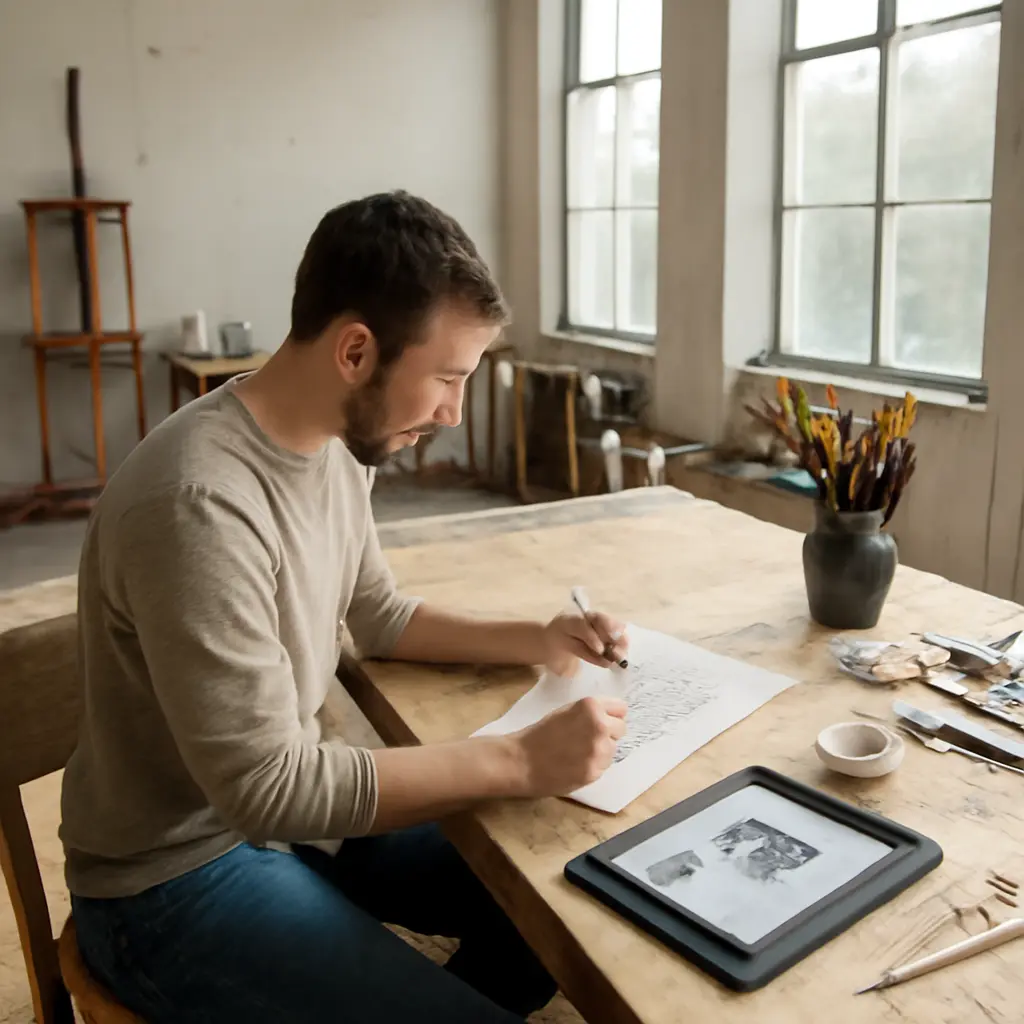
Hand-drawn vs digital art, which one actually wins with audiences
Hand-drawn and digital art are ways of making images, not measures of artistic quality: hand-drawn art is created through physical marks on paper or another surface, while digital art is made or substantially edited with digital tools. Which one wins with audiences depends less on the medium than on the work’s visual impact, subject, context, and how people encounter it. Research on aesthetic judgment suggests that viewers respond to features such as originality, fluency, and emotional resonance, while studies of digital reproduction show that presentation and perceived authenticity can influence how art is valued. Comparing audience response, creative process, accessibility, and real-world examples offers a more useful answer than declaring either medium the overall winner.
Audience response to hand-drawn and digital art
Hand-drawn art uses physical materials—such as graphite, ink, paint, or charcoal—to make marks on a surface. Digital art uses electronic devices and software to create or alter images. These categories overlap: an artist might draw traditionally, scan the result, and color it digitally. The distinction describes the production process, not whether an artwork is original, expressive, or skilled.
There is no strong, universal statistic showing that audiences consistently prefer one medium. A preference measured in a particular survey or exhibition can reflect the artwork, audience, display conditions, and question wording as much as the medium itself. The meaningful comparison is therefore conditional: traditional work may benefit from visible material texture and a one-of-a-kind physical object; digital work may benefit from vivid effects, rapid iteration, and easy distribution. Neither advantage guarantees a stronger audience response.
What audiences respond to
Audience response includes more than a viewer saying that an image is attractive. It can involve attention, emotional connection, interpretation, memorability, willingness to share, and—in a sales context—the decision to purchase. A 2004 study by psychologists Paul J. Silvia and James W. Nusbaum found that people’s interest in visual art is associated with how much they understand it and how complex or surprising they perceive it to be. That research does not establish a traditional-versus-digital winner; it helps explain why an engaging image can succeed in either medium.
For example, a digital illustration with a clear focal point and an affecting story may hold viewers longer than a loosely composed pencil drawing. Conversely, an expressive charcoal portrait may feel more immediate than a polished digital image that viewers find emotionally distant. These are judgments about execution and meaning, not proof that one tool is inherently more powerful.
Why there is no universal medium preference statistic
Results depend on what a study measures. Asking viewers which image they like, which seems more authentic, and which they would buy produces different questions and potentially different answers. Comparisons also need to control for subject, artist experience, image quality, size, and whether viewers see an original object or a photograph on a screen. Without those controls, a reported preference cannot establish that the medium caused the response.
This is especially important online, where a photograph of a painting and a digital image may both appear as pixels on the same display. A viewer cannot reliably judge the physical surface, scale, or material history from that presentation alone. The next comparison, then, is not simply about which medium looks better, but about what each process makes possible and what audiences can actually see.
Creative process and qualities of hand-drawn and digital art
The creative process is the sequence of decisions and actions through which an artist develops an image. In hand-drawn work, that process often involves direct contact between a tool and a physical surface. In digital work, it involves input devices, software, and a screen or other electronic display. These descriptions are practical rather than absolute: digital artists can use scanned marks, and traditional artists can use photographs or digital references.
The National Endowment for the Arts’ 2022 report on artists’ employment documents the varied work settings and occupations artists navigate, but it does not rank traditional and digital media by audience popularity. That distinction matters: the tools artists use are part of changing professional practice, while audience preference needs to be tested directly rather than inferred from artists’ working methods.
Hand-drawn art: material presence and variation
Hand-drawn art is made by applying physical media to a surface, including drawing with pencil, ink, pastel, or paint. Paper grain, pressure, smudging, and changes in pigment can create variation that is visible in the original. Each mark is part of a material object, which can give collectors and viewers a direct encounter with an artist’s process.
That physical character is not automatically a sign of greater authenticity or skill. A traditional work can be mechanically copied, and an artist can make deliberate, controlled marks with digital tools. Physical works can also be fragile, costly to ship, and difficult to reproduce consistently. Their texture is most apparent when viewers can see the original; a small online image may conceal the very qualities that distinguish it.
Digital art: revision, scale, and reproducibility
Digital art is created or edited with electronic tools, such as drawing tablets, styluses, computers, or image-making software. Layers, adjustable brushes, undo functions, and non-destructive edits can make experimentation and revision more convenient. Artists can also export work in different sizes or formats, making digital files useful for illustration, animation, games, and online publishing.
Digital convenience comes with different limitations. An artwork may depend on particular software, file formats, display settings, or hardware, and a screen cannot reproduce every physical surface or color accurately. Reproducibility can make distribution easier, but it can also complicate questions about editions, ownership, and which version is being sold. These are practical and market considerations, not evidence that audiences inherently like digital images more or less.
Hybrid art: combining physical and digital methods
Hybrid art combines traditional and digital methods, such as scanning a pencil drawing and completing it on a tablet, or printing a digital composition and adding paint by hand. The category is common in workflows where artists want both tactile marks and the flexibility of digital editing. It also shows why a strict two-way comparison can be misleading: the finished work may not belong exclusively to either medium.
For audiences, the relevant question is often what the final image communicates and how it is presented. A hybrid illustration might retain visible pencil texture while using digital color and clean typography. Its success cannot be attributed to one stage alone; it comes from the fit between technique, intention, and viewing context.
Access, presentation, and the art market
Access and presentation shape which artworks audiences encounter and how they experience them. A museum visitor may see brushwork and scale in person, while a social-media viewer sees a cropped, compressed image. Digital distribution can put work in front of more people, but reach is not the same as preference: a large number of views does not by itself show that an audience values an image more.
The U.S. Bureau of Labor Statistics reported that artists and related workers held about 1.9 million jobs in 2023, across occupations that include craft and fine artists, special effects artists, and animators. This broad employment measure illustrates the range of professional artmaking, but it does not separate workers by medium or measure what audiences prefer. It is useful context for a changing creative economy, not a popularity contest between paper and pixels.
Online circulation and audience reach
Online circulation is the ability to publish and share art through websites, social networks, digital portfolios, and online marketplaces. Digital files are straightforward to upload, but photographs and scans let traditional artworks circulate online too. The format that audiences encounter is therefore often a digital reproduction, even when the original was made by hand.
Reach should be separated from engagement and conversion. Views, likes, comments, saves, and purchases measure different behaviors, and platform algorithms influence which images people see. A traditional artist can build an online audience through high-quality documentation, while a digital artist still needs to attract attention in a crowded feed. For a fair comparison, creators should track the outcome that matters to them instead of treating raw exposure as proof of preference.
Originals, reproductions, and perceived authenticity
An original is a work regarded as the artist’s primary, authentic object or version; a reproduction is a copy or representation made from it. For a painting or drawing, the original carries physical features such as scale, surface, and material. A digital artwork may exist as a file, an editioned print, an interactive work, or a version that changes over time, so authenticity depends on the artist’s stated process and the work’s documentation.
In his 1935 essay “The Work of Art in the Age of Mechanical Reproduction,” cultural critic Walter Benjamin argued that reproduction changes how audiences encounter artworks and understand their unique presence. His essay offers a historical framework, not a contemporary survey showing that viewers prefer hand-drawn work. Today, provenance, edition information, and clear descriptions help audiences understand what they are viewing or buying, regardless of medium.
Choosing a medium for a real audience
Artists can make a practical choice by matching medium to purpose. A commissioned portrait, an animated sequence, a book illustration, and an exhibition piece have different production needs and audience settings. The best medium is the one that supports the intended experience, can be completed to the required standard, and can be presented effectively to the people it is meant to reach.
- Choose hand-drawn methods when physical texture, a unique original, or direct material mark-making is central to the work.
- Choose digital methods when frequent revision, animation, scalable output, or file-based collaboration is important.
- Consider a hybrid workflow when the work benefits from both physical marks and digital editing.
- Test audience response with comparable images and consistent presentation before drawing conclusions about medium.
Conclusion: which art form actually wins?
Neither hand-drawn nor digital art wins with audiences in every setting. Audience response depends on the image’s craft and meaning, the viewer’s expectations, and whether the work is seen as an original object, a reproduction, or a screen-based experience. Hand-drawn art can offer tactile presence and material variation; digital art can offer flexible revision and efficient distribution; hybrid art can combine both. Available employment and aesthetic research provide context, but they do not establish a universal medium preference.
For artists, publishers, and collectors, the useful next step is to evaluate the actual work and its audience rather than assume that a medium guarantees success. Compare similar pieces under consistent conditions, ask viewers what they respond to, and consider how the artwork will be displayed, shared, or collected. Further reading in art psychology, digital preservation, and audience research can help turn a broad debate into a more specific, testable question.
Sources: Silvia, Paul J., and James W. Nusbaum, “Aesthetic Experiences and Interest in Visual Art,” Review of General Psychology, 2004, https://doi.org/10.1037/1089-2680.8.4.342; National Endowment for the Arts, Artists’ Employment in 2022, https://www.arts.gov/impact/research/publications/artists-employment-2022; U.S. Bureau of Labor Statistics, “Artists and Related Workers,” Occupational Outlook Handbook, https://www.bls.gov/ooh/arts-and-design/craft-and-fine-artists.htm; Benjamin, Walter, “The Work of Art in the Age of Mechanical Reproduction,” 1935, https://www.marxists.org/reference/subject/philosophy/works/ge/benjamin.htm.