The Practice Trap That Secretly Builds Unshakeable Creative Belief
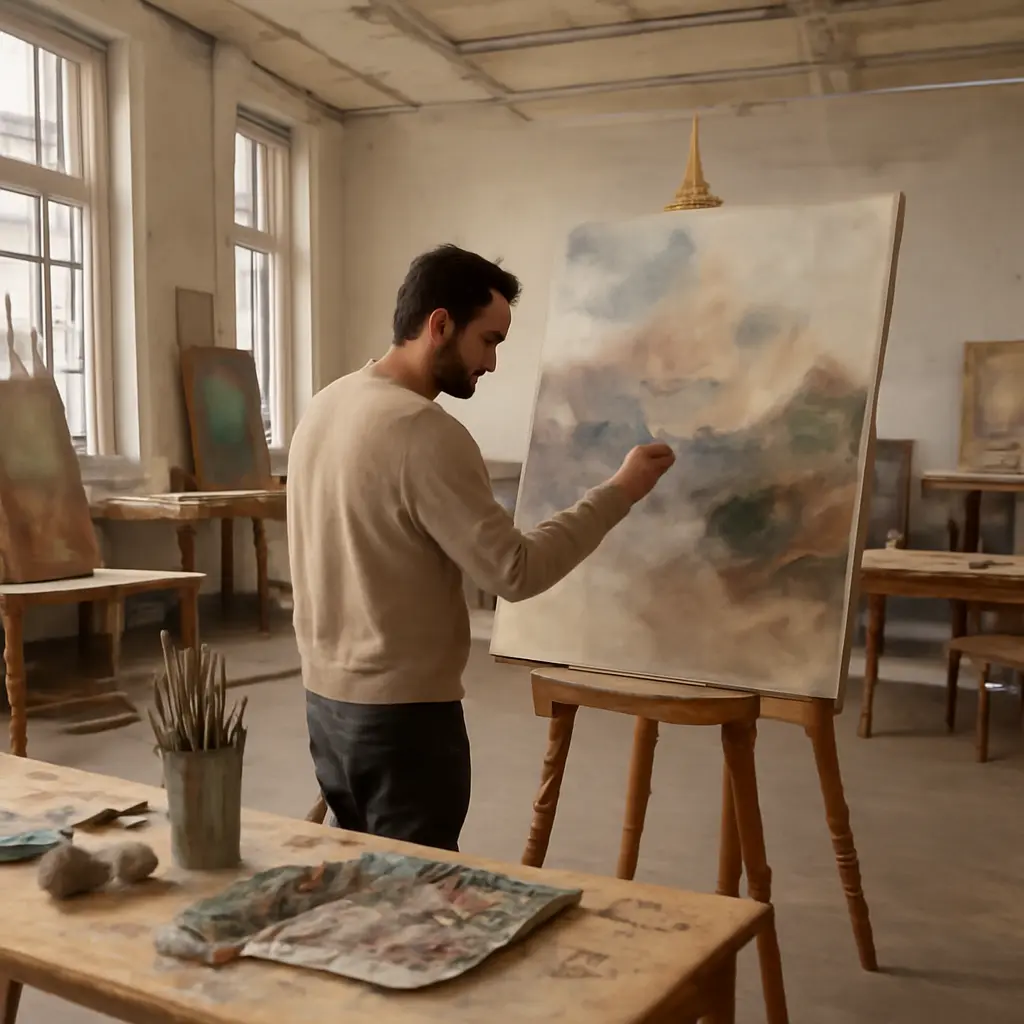
Creative practice is the repeated, deliberate work of making and revising art, writing, music, or other original work. Its “trap” is the belief that practice only counts when it produces immediate praise or a finished masterpiece. In fact, practice can build durable creative belief by giving people repeated evidence that skills develop through effort, feedback, and revision. Research on deliberate practice, growth mindset, and self-efficacy helps explain why; studies of expertise also caution that practice is not the only influence. Understanding that balance can make creative routines more useful—and less punishing.
Creative practice builds belief through repeated evidence
Creative belief is confidence grounded in experience: the sense that you can begin, learn, solve problems, and improve a piece of work. It is related to self-efficacy, psychologist Albert Bandura’s term for a person’s belief in their capability to organize and carry out actions needed for a task. It is not the same as believing every result will be excellent. Rather, it is the belief that a disappointing result can inform the next attempt.
The “practice trap” becomes productive when people treat imperfect work as information instead of a verdict on their talent. A musician who struggles with a passage, a writer who revises a flat paragraph, or a designer who tests several versions is gathering evidence of agency: “I can identify a problem and try something.” That evidence can strengthen confidence even before the work earns recognition.
This distinction matters because creative work is uncertain and often judged after long periods of private effort. A 2019 meta-analysis by Brooke Macnamara and colleagues estimated that deliberate practice explained about 26% of performance differences in games, 21% in music, 18% in sports, 4% in education, and less than 1% in professions. The figures do not mean practice is unimportant; they show that practice is one contributor among others, and that its effect varies by domain.
Deliberate practice connects effort to creative confidence
Deliberate practice is structured training aimed at improving specific aspects of performance. Psychologist K. Anders Ericsson and colleagues used the term for focused activities designed to address weaknesses, usually with clear goals, concentration, feedback, and opportunities to correct errors. It differs from merely spending time near a skill: repeating a song without attending to difficult measures, for instance, is not necessarily deliberate practice.
For creative work, the useful unit is often a small, observable challenge rather than a grand ambition. Instead of “become a better novelist,” a writer might practice scene transitions, dialogue, or point of view. A painter might study value contrasts; a composer might work on voice leading. Narrow targets make progress easier to notice and feedback easier to use.
Focused repetition and purposeful experiments
Focused repetition means returning to a specific difficulty with attention and a plan. It is different from simply producing more: the practitioner tests a change, observes what happens, and adjusts. A poet might rewrite a stanza three ways to compare rhythm and emphasis, while a photographer might vary aperture or light to understand how each affects the image.
This kind of experiment can support belief because it makes improvement less mysterious. The creator can connect an action to a result, even when the result is modest. Ericsson’s research on expert performance emphasized structured practice, but Macnamara’s later synthesis makes an important qualification: deliberate practice does not explain all differences in achievement, and the available evidence varies considerably across fields.
Feedback, revision, and the learning loop
Feedback is information about the difference between an intended result and the current result. It may come from a teacher, editor, collaborator, audience, recording, or the creator’s own review. Useful feedback is specific enough to guide a next step; “this does not work” is less actionable than “the scene’s goal is unclear before the interruption.”
Revision turns feedback into practice. The loop is simple: make an attempt, inspect it, identify one useful adjustment, and try again. In a well-known study of music learning, Duke, Simmons, and Cash analyzed practice sessions by expert performers and found that effective practice behaviors included identifying errors, adjusting strategies, and working on difficult passages. The study concerned a small group of musicians, so it should be treated as an illustrative case rather than a universal formula.
Growth mindset reframes mistakes as information
A growth mindset is the view that abilities can develop through learning, strategy, and effort, rather than being fixed once and for all. Stanford psychologist Carol Dweck’s research popularized the distinction between growth and fixed mindsets. Applied carefully, the idea does not promise that anyone can become exceptional at anything through effort alone. It encourages people to treat current ability as changeable and to choose strategies that support learning.
For creative practice, this framing changes the meaning of a weak draft or failed sketch. The mistake becomes evidence about the work and the approach, not proof of a permanent lack of talent. The most constructive response is not endless self-criticism, but a concrete question: what can this attempt teach me about the next one?
Process goals protect motivation
Process goals describe controllable actions, such as writing for 25 minutes, making three thumbnail sketches, or practicing a difficult transition. Outcome goals describe results that may depend on other people or circumstances, such as winning a competition or receiving a publishing contract. Both can matter, but process goals give creators a dependable way to define a successful session.
A 2018 national survey by the National Endowment for the Arts found that 52% of U.S. adults reported creating or performing art in the previous year. The category included activities such as making visual art, playing music, and writing creatively. That broad participation is a reminder that creative practice is not restricted to people pursuing professional recognition; it can be a meaningful activity in its own right.
Self-efficacy grows from mastery experiences
Mastery experiences are occasions when people successfully complete a challenge or make progress on it. Bandura identified them as a major source of self-efficacy. In creative practice, a mastery experience need not be a celebrated finished work. Completing a difficult revision, returning after a long pause, or solving one technical problem can all provide credible evidence of capability.
This is why keeping a record can help. A brief practice log might note the task, the obstacle, the adjustment, and what changed. Over time, it creates a more reliable picture than memory alone, which may overemphasize recent failures or successes. The record can also show when a method is not working and needs to be changed.
Creative routines make practice sustainable
A creative routine is a repeatable structure that makes it easier to begin and continue working. It may specify a time, place, warm-up, session length, or stopping point. Routines reduce the need to decide from scratch each day, but they should support attention rather than become rigid rules that turn missed sessions into evidence of failure.
Small sessions lower the starting barrier
A small session is a deliberately manageable commitment, such as sketching for ten minutes or revising one paragraph. Its purpose is to make starting easier, not to set a ceiling on achievement. Once underway, a creator can continue if energy and time allow; if not, the session still preserves contact with the work.
This approach is especially useful when a project feels intimidating or when a person is returning after a break. The National Endowment for the Arts’ participation data shows that creative activity is common, but participation alone does not tell us how often people practice or what causes them to continue. A modest, repeatable plan is therefore best treated as a practical strategy, not as a statistically guaranteed route to success.
Reflection turns effort into evidence
Reflection is a short review of what happened during practice: what was attempted, what improved, and what remains difficult. It helps separate effort from outcome. A creator can recognize a useful strategy even when the final piece is unfinished, and can decide what to practice next rather than relying on a vague sense of inadequacy.
A practical reflection might ask: What was today’s specific target? What did I notice? What is one adjustment for next time? This simple routine connects repetition to learning. It also helps prevent the “practice trap” from becoming a cycle of unexamined work, in which someone repeats the same approach while expecting a different result.
The limits of practice matter as much as its promise
Practice can develop technique and confidence, but it does not guarantee fame, employment, or mastery. Opportunity, access to instruction and equipment, health, time, social support, prior experience, and chance can all influence creative outcomes. Macnamara and colleagues’ findings are a useful corrective to simplistic claims that practice alone determines performance.
A healthy practice system also allows rest, play, and exploration. Not every session needs to target a weakness; open-ended making can generate ideas and renew interest. If practice consistently produces distress, exhaustion, or a sense of compulsion, the schedule or expectations may need adjustment. The goal is not to prove worth through relentless output, but to build a sustainable relationship with making.
Conclusion: practice turns creative belief into earned trust
Creative practice builds unshakeable belief not by guaranteeing perfect results, but by repeatedly demonstrating that a person can act, learn, revise, and return. Deliberate practice gives effort a target; feedback and reflection make it informative; growth-oriented thinking helps mistakes remain useful; and manageable routines make the process sustainable. Research supports practice as an important contributor to performance while showing that it is not the only one.
To put the idea into action, choose one small skill to practice, set a process goal, seek specific feedback, and keep a brief record of what changes. Treat the next imperfect attempt as evidence to examine—not a verdict to accept. For further reading, explore Bandura’s work on self-efficacy, Ericsson’s research on deliberate practice, and the National Endowment for the Arts’ survey of arts participation.
Sources: Albert Bandura, “Self-Efficacy: Toward a Unifying Theory of Behavioral Change,” Psychological Review, 1977, https://doi.org/10.1037/0033-295X.84.2.191; K. Anders Ericsson, Ralf Th. Krampe, and Clemens Tesch-Römer, “The Role of Deliberate Practice in the Acquisition of Expert Performance,” Psychological Review, 1993, https://doi.org/10.1037/0033-295X.100.3.363; Brooke N. Macnamara, David Z. Hambrick, and Frederick L. Oswald, “Deliberate Practice and Performance in Music, Games, Sports, Education, and Professions: A Meta-Analysis,” Psychological Science, 2014, https://doi.org/10.1177/0956797614535810; Brooke N. Macnamara and David Z. Hambrick, “The Relationship Between Deliberate Practice and Performance in Sports: A Meta-Analysis,” Perspectives on Psychological Science, 2020, https://doi.org/10.1177/1745691619863801; Carol S. Dweck, “Mindsets and Math/Science Achievement,” Carnegie Corporation of New York, 2008, https://www.carnegie.org/publications/mindsets-and-math-science-achievement/; Andrew J. Duke, Robert A. Simmons, and Carla A. Cash, “It’s Not How Much; It’s How: Characteristics of Practice Behavior and Retention of Performance Skills,” Journal of Research in Music Education, 2009, https://doi.org/10.1177/0022429409334452; National Endowment for the Arts, U.S. Patterns of Arts Participation: A Full Report from the 2017 Survey of Public Participation in the Arts, 2019, https://www.arts.gov/impact/research/publications/us-patterns-arts-participation-full-report-2017-survey-public-participation-arts.