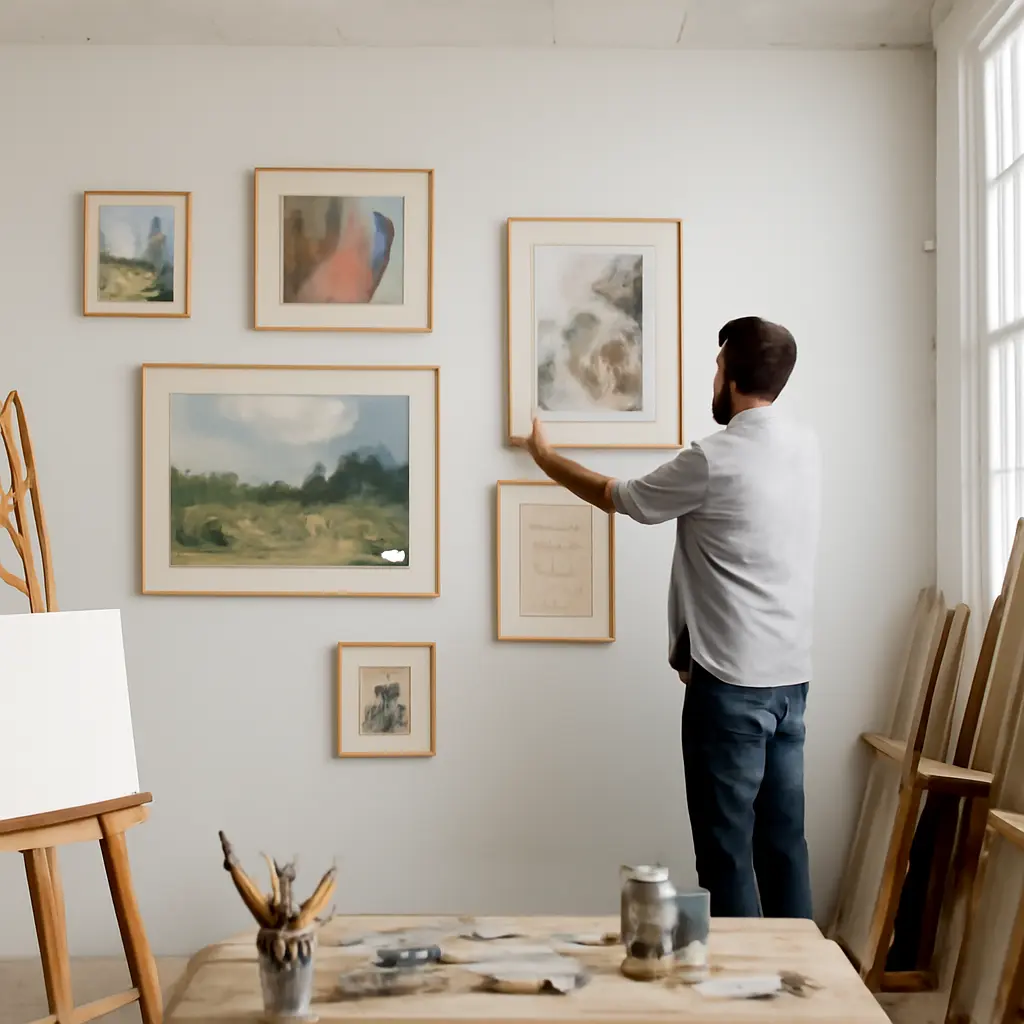
Inside a Working Artist’s Portfolio Building Process and Decision-Making
A working artist’s portfolio is a deliberately selected presentation of work that helps a particular audience understand the artist’s abilities, point of view, and professional fit. Building one is not simply a matter of collecting favorite pieces: it involves choosing work against a goal, sequencing it for clarity, tailoring it to viewers, and revising it as practice and opportunities change. The process matters in a competitive creative economy: the U.S. Bureau of Labor Statistics counted about 270,900 jobs for craft and fine artists in 2023, while noting that many artists hold another job or work irregularly. This guide explains portfolio selection, editing, presentation, audience-specific versions, and maintenance, with practical decision criteria and examples.
Portfolio Building and Selection Decisions
A portfolio is a curated body of work used to communicate an artist’s practice and make a case for an opportunity, such as a commission, exhibition, job, residency, or grant. The National Endowment for the Arts describes portfolio materials in its grant guidance as documentation that helps reviewers assess an applicant’s artistic work; in professional practice, the same principle applies: selection is evidence, not decoration. A strong portfolio is coherent enough to be understood quickly but varied enough to show relevant capability.
Goal-led selection
Goal-led selection means evaluating each piece according to the decision the portfolio needs to support. An illustrator seeking editorial commissions may prioritize clear visual storytelling and range of subject matter; a painter applying to a residency may foreground a sustained investigation and its development. Before choosing work, write a one-sentence objective and identify the viewer: “This portfolio demonstrates my ability to create expressive, deadline-ready editorial illustrations for culture publications.” That statement gives each inclusion a job.
A practical first pass is to gather possible work, then score it against a few criteria: relevance, quality, consistency, distinctiveness, and recency. Scoring is a decision aid rather than a universal formula. It helps reveal when a personally meaningful piece is less persuasive for the intended audience, or when a technically polished work repeats what several stronger examples already prove.
Editing for strength and coherence
Editing is the removal of work that weakens the portfolio’s overall argument. A useful test is whether each piece adds new evidence: a different skill, scale, material, subject, or stage of thinking. If it merely repeats an existing example, it may be redundant. Conversely, a portfolio can become so narrow that it suggests the artist has only one solution. The aim is purposeful range, not maximum quantity.
For example, a ceramic artist applying to a functional-design market might retain a tightly related group of vessels that demonstrates form, finish, and production consistency, while excluding experimental work that distracts from the application. The same artist could create a separate portfolio for a gallery proposal, where experimentation and conceptual development are more relevant. The selection changes because the audience and decision change.
Sequencing as visual argument
Sequencing is the order in which a viewer encounters work. It shapes first impressions, establishes rhythm, and can make connections between pieces visible. Lead with a strong, representative example; follow with work that expands the story rather than repeating it; and finish with a piece that leaves a clear impression. For a project-based portfolio, arrange images to explain the progression from initial concept to finished outcome.
There is no single ideal image count for every discipline or opportunity. Follow the application’s specifications first. Where no limit is given, make the portfolio short enough to navigate easily and substantial enough to support its claims. A contact sheet—a grid of thumbnails—can help artists assess repetition, visual pacing, and gaps before finalizing the order.
Portfolio Presentation and Audience Fit
Selection determines what the portfolio says; presentation determines how easily a viewer can receive it. The artist should make the work legible, provide accurate context, and reduce friction in moving from an image to a professional inquiry. This is especially important because a portfolio may be reviewed quickly, on different screens, or within a formal application system.
Digital and physical formats
A digital portfolio is an online or downloadable presentation that can be shared and updated; a physical portfolio is a prepared collection of prints or objects intended for in-person review. Digital formats suit broad access and frequent revision. Physical formats can be useful when scale, surface, material, or print quality is central to understanding the work. Artists working across media may need both.
Presentation should serve the work rather than compete with it. Use consistent image dimensions and neutral backgrounds where appropriate, check that colors and details remain readable, and label files clearly. For physical work, include installation views or detail photographs when a single image cannot convey scale or texture. The Smithsonian’s National Museum of American History and other collecting institutions emphasize documentation and cataloging as part of responsible object management; artists can apply a comparable habit by maintaining reliable titles, dates, media, dimensions, and image records.
Captions, context, and case studies
Captions identify and contextualize a work. Common details include title, year, medium, dimensions, and the project or client when relevant. A brief note can explain a commission’s constraints or an artwork’s conceptual question, but it should not force viewers to read a long statement before they can assess the work. In a case-study format, show the challenge, process, and outcome—for instance, how an artist developed a mural concept with a neighborhood group, adapted it to site conditions, and completed the installation.
Accuracy is part of professional trust. Distinguish personal work from commissioned work, identify collaborators, and avoid implying that an exploratory mock-up was a finished client deliverable. If a project is confidential or permission is limited, obtain consent or omit sensitive materials.
Tailoring portfolios to viewers
Tailoring means adjusting the selection and framing of work to match a viewer’s needs without misrepresenting the artist’s practice. A gallery curator may look for a coherent body of work and a clear artistic inquiry; a design client may need evidence of problem-solving, production skills, and successful delivery. A hiring manager may scan for specific tools or formats, while a grant panel may assess artistic development and feasibility.
Artists can maintain a master archive and create focused versions from it. This avoids rebuilding the portfolio from scratch while allowing each submission to answer a distinct question. The U.S. Small Business Administration recommends understanding target customers and communicating a business’s value proposition; for artists, the analogous practice is learning what a particular opportunity values and making relevant evidence easy to find.
Portfolio Revision and Professional Decision-Making
A portfolio is a working document, not a permanent monument. New work, changing goals, feedback, and shifts in the market can all make an earlier selection less useful. Regular review turns portfolio building into a repeatable professional practice rather than a stressful task triggered only by deadlines.
Feedback and evidence
Feedback is most useful when it comes from people who understand the intended context: peers for craft and clarity, a curator for exhibition fit, or a client for commercial communication. Ask focused questions, such as “Which three works best support this application?” or “Where did you lose track of the project’s purpose?” Specific questions yield more actionable responses than asking whether someone simply likes the portfolio.
Track practical outcomes as well as opinions: inquiries, interviews, sales, invitations, and recurring questions from reviewers. These signals do not measure artistic worth, but they can show whether the portfolio is communicating effectively to its intended audience. If viewers repeatedly misunderstand the medium or miss the artist’s role in a project, captions or sequencing may need revision.
Maintenance, rights, and accessibility
Maintenance includes replacing outdated work, checking that contact information works, reviewing image permissions, and keeping backup copies of files. Artists should preserve original-resolution images and maintain a simple inventory so they can respond efficiently to opportunities. The U.S. Copyright Office explains that copyright protection generally arises when an original work is fixed in a tangible medium; however, displaying work online does not mean the artist has granted unrestricted permission to reproduce it. Clear credit and usage terms help set expectations.
Accessibility makes a portfolio easier for more people to use. Provide meaningful alternative text for images, maintain readable contrast and text size, and avoid relying on color alone to convey information. W3C guidance for web accessibility treats text alternatives for non-text content as an important way to make information available to people using assistive technologies. For a visual portfolio, concise alt text should describe the image’s essential content and purpose rather than repeat its caption word for word.
A repeatable review cycle
A simple review cycle makes decisions manageable: define the next goal, audit the archive, select and sequence relevant work, check presentation and permissions, ask for targeted feedback, and revise after observing results. Schedule a review at least when a major opportunity arises and periodically as new work is completed. This protects the portfolio from becoming either a random archive or a stale snapshot of an earlier career stage.
The broader value is strategic: a well-maintained portfolio helps artists explain what they do, recognize gaps in their practice, and choose opportunities that fit their direction. Start by writing the portfolio’s purpose, then make one focused version and test it with a knowledgeable viewer. Further guidance is available from the Bureau of Labor Statistics’ artist occupation profiles, the U.S. Copyright Office, and W3C accessibility resources.
Conclusion
Working artists build portfolios through linked decisions: goal-led selection determines what evidence to show; editing and sequencing make that evidence coherent; presentation and audience fit make it accessible; and feedback, rights checks, and routine maintenance keep it useful. Employment figures from the Bureau of Labor Statistics reinforce the practical context: many artists navigate irregular work and multiple income sources, making clear professional communication valuable. Treat the portfolio as an evolving tool, not merely a collection of images. Define the next opportunity, curate for its audience, and review the result with informed peers.
Sources: U.S. Bureau of Labor Statistics, Craft and Fine Artists, https://www.bls.gov/ooh/arts-and-design/craft-and-fine-artists.htm; National Endowment for the Arts, Grant Application Resources, https://www.arts.gov/grants; U.S. Small Business Administration, Market Research and Competitive Analysis, https://www.sba.gov/business-guide/plan-your-business/market-research-competitive-analysis; Smithsonian Institution, Collections Management, https://www.si.edu/collections-management; U.S. Copyright Office, Copyright Basics, https://www.copyright.gov/what-is-copyright/; World Wide Web Consortium (W3C), Images Tutorial, https://www.w3.org/WAI/tutorials/images/